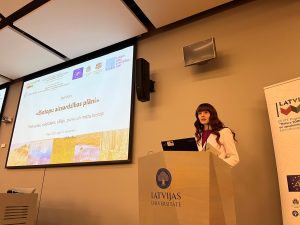


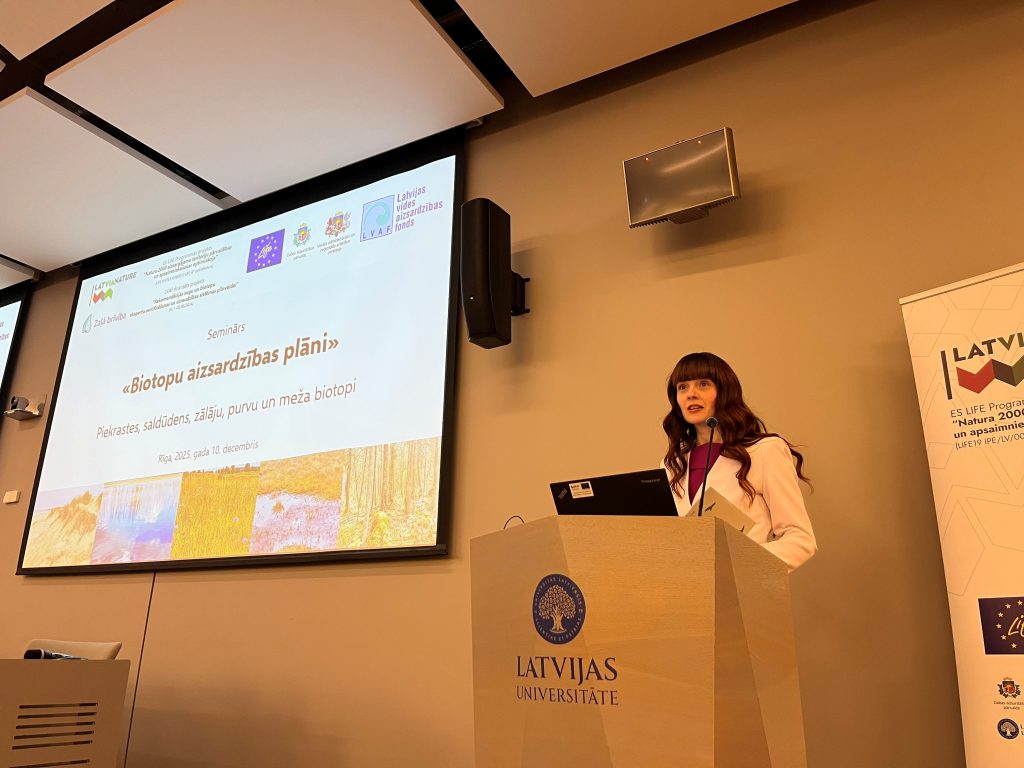
During the seminar, experts from the LatViaNature project presented draft versions of habitat conservation plans for five habitat groups—coastal, freshwater, grassland, mire, and forest habitats. The experts explained the development process and scientific basis of the plans, and gathered feedback for their improvement before finalisation and submission to the Ministry of Smart Administration and Regional Development for approval.
Seminar presentations in Latvian:
- More targeted nature conservation. Habitat conservation plans – Daiga Vilkaste, Director of the Nature Conservation Department, Ministry of Smart Administration and Regional Development
- Coastal and heathland habitat conservation plans – Brigita Laime, Nature Conservation Agency, LIFE-IP LatViaNature
- Freshwater habitat conservation plans – Lauma Vizule-Kahovska, Linda Uzule, Nature Conservation Agency, LIFE-IP LatViaNature
- Grassland habitat conservation plans – Baiba Galniece, Nature Conservation Agency, LIFE-IP LatViaNature
- Mire and spring habitat conservation plan – Anita Namatēva, Nature Conservation Agency, LIFE-IP LatViaNature
- Forest habitat conservation plans – Sandra Ikauniece, Nature Conservation Agency, LIFE-IP LatViaNature
Draft versions of the habitat conservation plans are available HERE >>>
What are habitat conservation plans and how will they be used?
Habitat conservation plans represent the next step in Latvia’s nature conservation system following the data collected during the national habitat mapping initiative, its analysis, and the quantitative conservation targets for habitats and species developed by the LatViaNature project last year.
In total, 21 habitat conservation plans have been developed for 56 protected habitat types of European Union importance, grouped into five categories: coastal, freshwater, grassland, mire, and forest habitats. These plans assess the conservation status of habitats and define the necessary protection and management measures to ensure their favourable condition, as required by the EU Habitats Directive binding for Latvia.
The work carried out by leading nature experts and scientists is a significant contribution to the development of the national nature restoration plan required for implementing the EU Nature Restoration Regulation. The habitat conservation plans will also be used to attract funding for habitat management and restoration, propose amendments to legislation, and adjust the boundaries of Natura 2000 areas, among other applications.
Sandra Ikauniece, Head of the Habitat Conservation Unit of the LIFE-IP LatViaNature project at the Nature Conservation Agency, emphasizes: “Nature conservation is science-based—these conservation plans have been developed by scientists and nature experts using the latest available data and scientific methods. Today, we are presenting conclusions and proposals to ensure a favourable conservation status for EU-priority habitats in Latvia.”